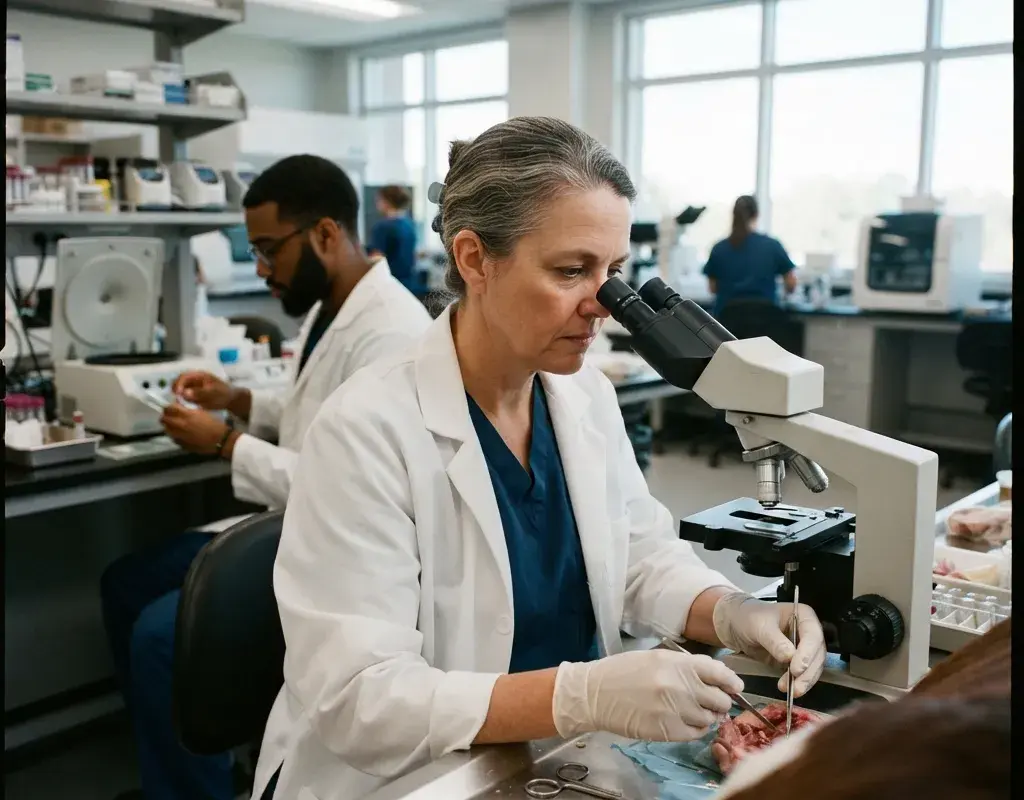
Virginia is investing millions to overhaul its network of animal health laboratories, ensuring that the state’s multibillion dollar agricultural industry stays ahead of evolving diseases. At the center of this effort is a major expansion in Lynchburg, where the Virginia Department of Agriculture and Consumer Services is updating a facility that hasn’t seen a remodel since the nineties. While labs in Harrisonburg and Warrenton are also receiving upgrades, the Lynchburg site holds a unique responsibility as the only hub specializing in food safety, screening everything from deli meats to ice cream for dangerous bacteria like listeria and salmonella.
A primary driver for the expansion is the skyrocketing demand for PCR testing, a sophisticated method that identifies pathogens directly rather than waiting for an animal to develop antibodies. This shift in technology has fundamentally changed how outbreaks are managed. During a 2002 bird flu crisis, slow antibody tests allowed the virus to spread through hundreds of flocks. In contrast, using PCR during a more recent outbreak enabled officials to contain the virus after only two flocks were affected. The demand for these rapid results has grown so significantly over five years that there has been a 300 percent increase in testing volume, forcing technicians who once worked out of a repurposed storage closet into desperate need of dedicated space.
To avoid becoming obsolete again, the new additions are being designed with extreme flexibility. Instead of permanent fixtures bolted to the floor or walls, the updated rooms will feature movable counters and cabinets. According to program manager Jessica Walters, this approach effectively future proofs the facility, allowing staff to reorganize entire rooms overnight as new technologies emerge long after the current construction concludes in 2027.
Beyond the science benches, the project includes practical improvements for those delivering samples. A new front lobby will feature refrigerated lockers, allowing farmers and agencies to drop off specimens at any hour without needing direct access to staff. From monitoring raw milk quality to acting as the final checkpoint before ice cream hits grocery store shelves, these upgrades represent a critical layer of protection for both livestock health and public safety across the Commonwealth.