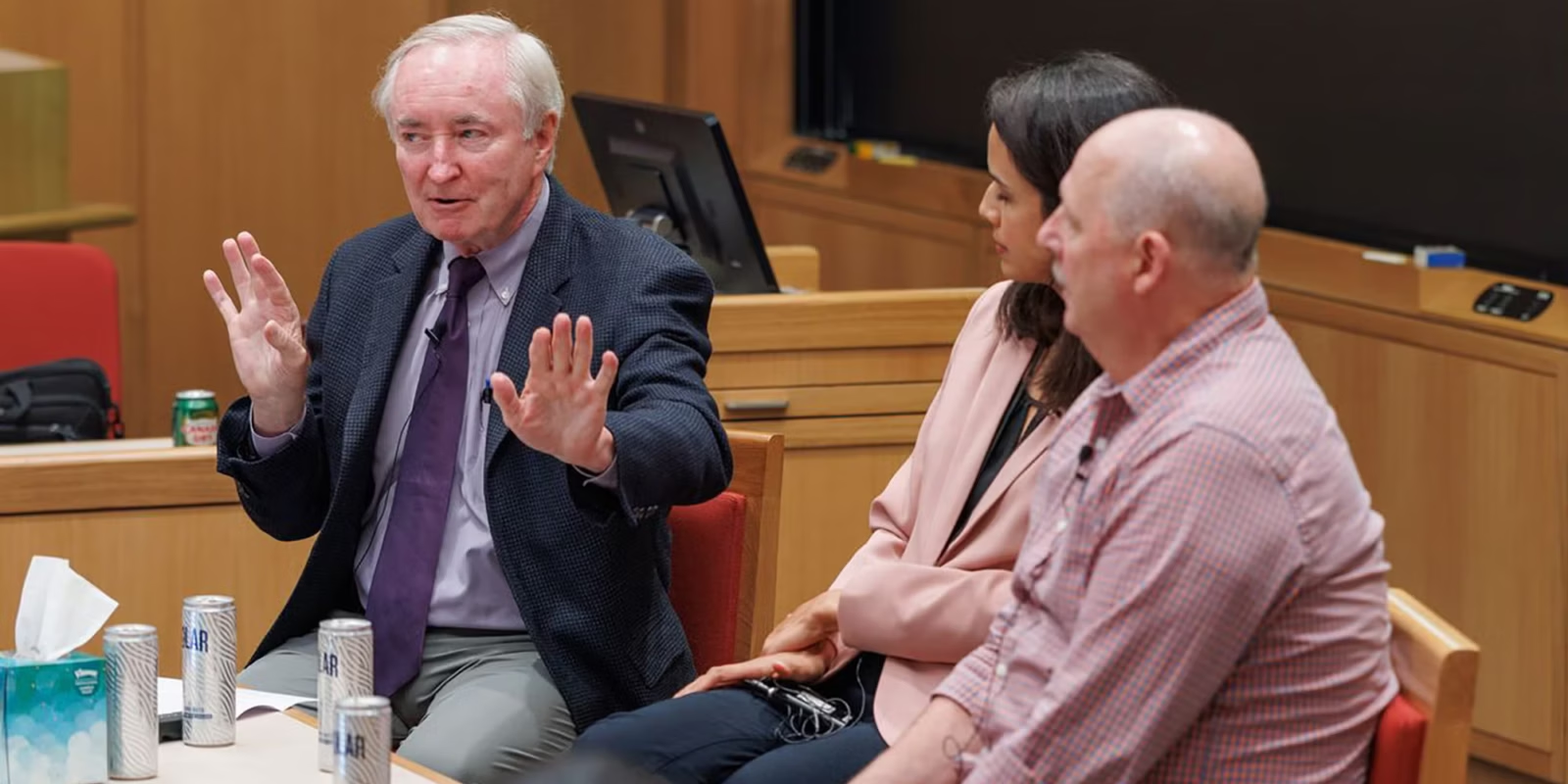
With the humanitarian crisis of homelessness reaching critical levels across the United States, experts and policymakers recently gathered for the Beyond Shelter conference to seek practical, scalable solutions. Hosted by the Initiative on Health and Homelessness at the Harvard T.H. Chan School of Public Health, the two day event brought together a diverse coalition ranging from university researchers and business leaders to mayors and individuals who have personally experienced life on the streets. The gathering aimed to move beyond temporary fixes toward systemic changes in urban policy, healthcare, and public perception.
A recurring theme throughout the sessions was the necessity of cross sector collaboration. Mayors Ras Baraka of Newark and Dean Trantalis of Fort Lauderdale detailed how partnering with public safety and business communities helped reduce unsheltered populations in their respective cities. This sentiment was echoed by representatives from the U.S. Chamber of Commerce, who argued that affordable housing should be viewed as essential infrastructure because it directly impacts a company’s ability to attract and retain talent when workers can no longer afford to live near their jobs. From 3D concrete printing to modular housing, attendees explored innovative ways to bridge a national affordable housing deficit that now exceeds seven million units.
Beyond bricks and mortar, the conference placed a heavy emphasis on humanizing those living without homes. Speakers challenged the idea that seeing vulnerable people on city sidewalks should be accepted as a social norm, while social media creators discussed using digital platforms to dismantle stigmas through emotional storytelling. Chad Bojorquez of Destination: Home highlighted the effectiveness of flexible cash transfers to prevent families from falling into homelessness, proving that direct financial support can often stop a crisis before it begins.
The event concluded with poignant reflections from clinicians and former residents associated with the Boston Health Care for the Homeless Program. Recovery coaches and medical professionals stressed that effective outreach begins with compassion rather than an agenda, urging providers to meet people exactly where they are without preconceived notions of their needs. By elevating these lived experiences, organizers hope to ensure that future policies are shaped by those most affected by them, moving toward a more equitable system defined simply by kindness and dignity.